Managing Three Key FBO Touch Points of Customer Engagement
/
Image credit: Jupiterimages/Getty images
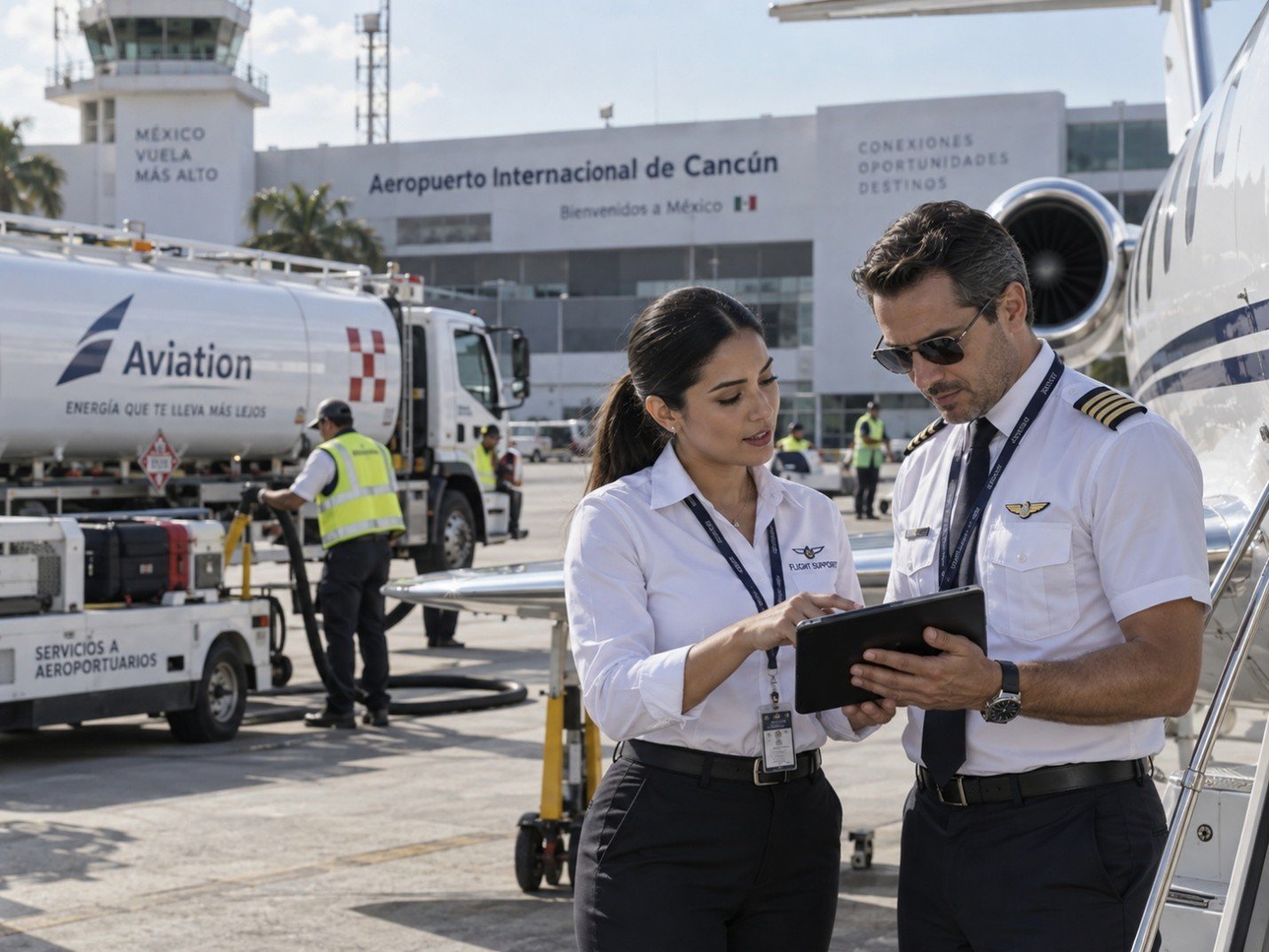
In the FBO environment, there are three key touch points that offer customers the ability to positively interact with your brand. Each of these interactions provides an opportunity for the FBO to meaningfully engage the customer in order to build trust and shape a positive perception.
These key touch points can be grouped into three stages of customer engagement: initial contact, workplace contact and follow-up contact.
Stage 1: Initial Contact
In making initial contact with potential customers, an FBO should layout a strategic plan to use all available channels of communications. This includes website/landing pages which act as the main hub for company and service offerings. An active link to blog posts offers another layer of customer engagement and provides a forum for posting current events and other relative content.
Social media provides another channel in which to engage potential and existing customers with relative and meaningful content. Postings to social media channels should be well thought out and aid in creating a positive image that helps build trust in the enterprise.
Online and print advertising in aviation media with content aimed at your customers, like AC-U-KWIK, offer a platform for FBOs to highlight their value proposition and to help drive customer choice.
News releases sent to aviation media can be used to announce new or improved services, expansion projects, significant milestones and key promotions.
Aviation trade shows, like the NBAA Schedulers & Dispatchers (S&D) Conference can provide a touch point opportunity to meet face-to-face with both potential and existing customers.
Stage 2: Workplace Contact
Workplace customer engagement connects the customer experience with the internal employee culture. An FBO staff that is empowered and fully engaged helps build stronger customer brand loyalty and produces higher productivity centered around cross-team collaboration between CSRs, line service technicians, and back-office accounting.
Once you have made initial contact with a potential customer, the next step is to engage the customer in the workplace in a way that sets the stage for building further trust. Only then can a ordinary transaction become a customer transformation.
The process starts from the moment the customer’s aircraft taxis onto the FBO ramp. As one pilot told us, first impressions are key.
“Is the line service technician ready and waiting to usher in the aircraft? Does the technician use crisp and sharp hand signals? Are safety cones, welcome mats and GSE in reasonable shape and stored in an orderly fashion? These are the types of things we look for,” the pilot said.
“If not,” the pilot explained, “we wonder what the FBO looks like inside and if the lounges and restrooms are clean for the convenience of our passengers.”
Once the aircraft is securely parked, shut down, coned and chalked, disembarking passengers and their luggage should have first priority before the crew is approached by line service employees for any fuel or other aircraft servicing requests. If the crew or dispatcher has contacted the FBO prior to arrival with a service request, the line service technician should have this information in hand and repeat it back to the pilot-in-command.
If the customer is experiencing your FBO for the first time, keep in mind that building trust between the front-line employees and the flight crew is key to building loyalty. Timeliness and attention to detail will help turn an ordinary transaction into a long-term customer transformation.
Stage 3: Follow-up Contact
After the customer leaves your FBO, the process of engaging the customer is only two-thirds accomplished. To fully complete the customer engagement process, timely follow-up contact is essential. A thank you email is OK, but frankly, it is fairly impersonal. A handwritten note is always a nice touch and demonstrates a sincere gesture of gratitude.
Also, keep in mind that not every customer will have a positive experience with your FBO, even those that have been loyal over the years. So always be alert in regards to reading a customer’s body language when preparing for departure. Some disgruntled customers will let you know how they feel on the spot. At least that way you can deal with any issues at the point of transaction.
Others may keep their frustrations to themselves. However, it is often easy to tell if something is off. In this case, approach the customer and ask if the service provided met their expectations. This way you can address any issues in real-time before the customer leaves and turns to social media to openly express displeasure.
Please leave any comments you have about this blog post below. If you have any questions, please send us an email: John Enticknap, jenticknap@bellsouth.net, Ron Jackson, ronjacksongroup@gmail.com,
© 2026 ABSG/TJG
SUBSCRIBE: Subscribe to the AC-U-KWIK FBO Connection Newsletter