FBOs Eye Shift in Customer Mix
/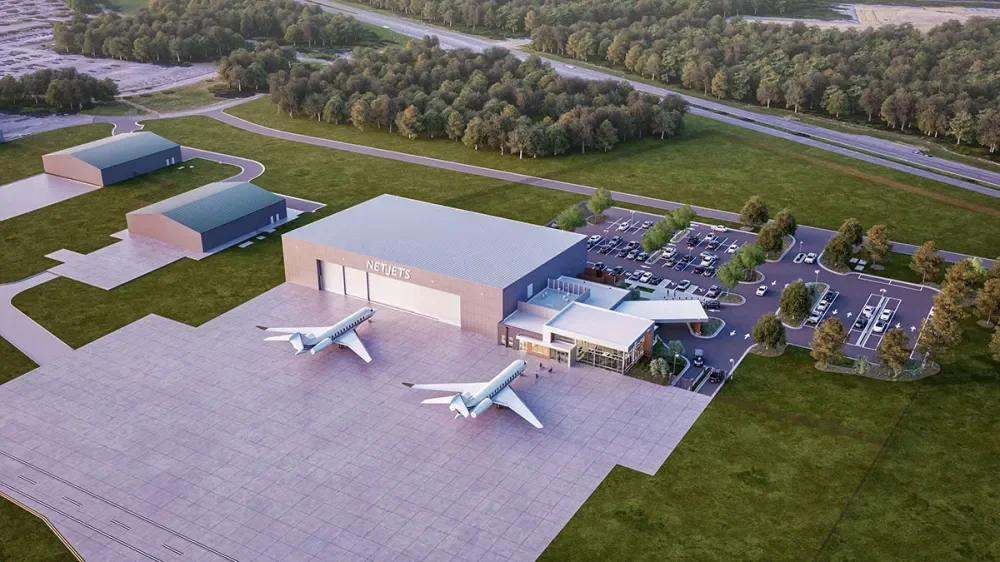
netjets private terminal currently under construction in augusta, georgia (image: netjets)
As North America FAR Part 91 business aircraft flight activity continues a long and steady decline, FBOs are shifting their focus to capture more of the emerging fractional aircraft and commercial charter markets.
Long a bread-and-butter staple of the FBO fueling business, traditional Part 91 flight operations at one time represented more than 50% of business aviation flight activity dating back to 2019. Since then there has been a slow and steady decrease in flight hours for this category while fractional, scheduled commuter and on-demand charter operations (FAA Part 135) have seen steady increases.
In the recent TraqPak data released by Argus International, North American business aviation flight activity continued to rise in September with fractional operations up 7.2% and Part 135 operations up 3% year-over-year.
However, Part 91 operations posted a 3.4% loss in flight activity in September with midsize and large-cabin jets in this category recording double-digit declines for two consecutive months.
Although not a sudden or seismic shift in the overall scope of the business aircraft service industry, FBOs should be aware of this trend and understand the underlying dynamics that are affecting their business and the industry as a whole.
In conducting our discovery work, we found a trend where Part 91 operations, particularly those utilizing large-cabin and midsize jets, are increasingly reevaluating the cost of aircraft ownership and recurring overhead expenditures to include maintenance, insurance, hangar rental and crew staffing.
Although aircraft management programs offer an alternative approach to partially offsetting the cost of aircraft ownership, jet-share/fractional programs have gained in popularity as well as card programs and on-demand charter. It is estimated that fractional flight activity in North America grew by more than 10% during 2025.
Another change in the traditional FBO landscape is the emergence and construction of owner-exclusive customer terminals by both Flexjet and NetJets. More than 10 planned or newly opened terminals are already dotting the country with locations to include Scottsdale Airport, Augusta Regional and Austin-Bergstrom International Airport to name a few. Some locations are offering hangar operations and including maintenance. In addition, Flexjet has recently opened an international terminal facility at Farnborough Airport.
Although the fractional programs will still need refueling services at these new enterprise terminals, primarily provided by FBOs, some ancillary services may be offered by the fractional operators.
Moving forward, it is important that FBOs continue to build enduring relationships with all aircraft operators. Starting with schedulers and dispatchers and adding online and social presence, FBOs need to tell their own personal story.
FBO operations do not need to have over-the-top terminal buildings with all the bells and whistles. But they do need to put their best foot forward every day to offer a clean and well-organized facility while building trust through providing an exceptional customer experience.
Please leave any comments you have about this blog post below. If you have any questions, please send us an email: John Enticknap, jenticknap@bellsouth.net, Ron Jackson, ronjacksongroup@gmail.com,
© 2026 ABSG/TJG
SUBSCRIBE: Subscribe to the AC-U-KWIK FBO Connection Newsletter