CAA Seeks to Further Engage with Stakeholders – Sir Stephen Hillier
/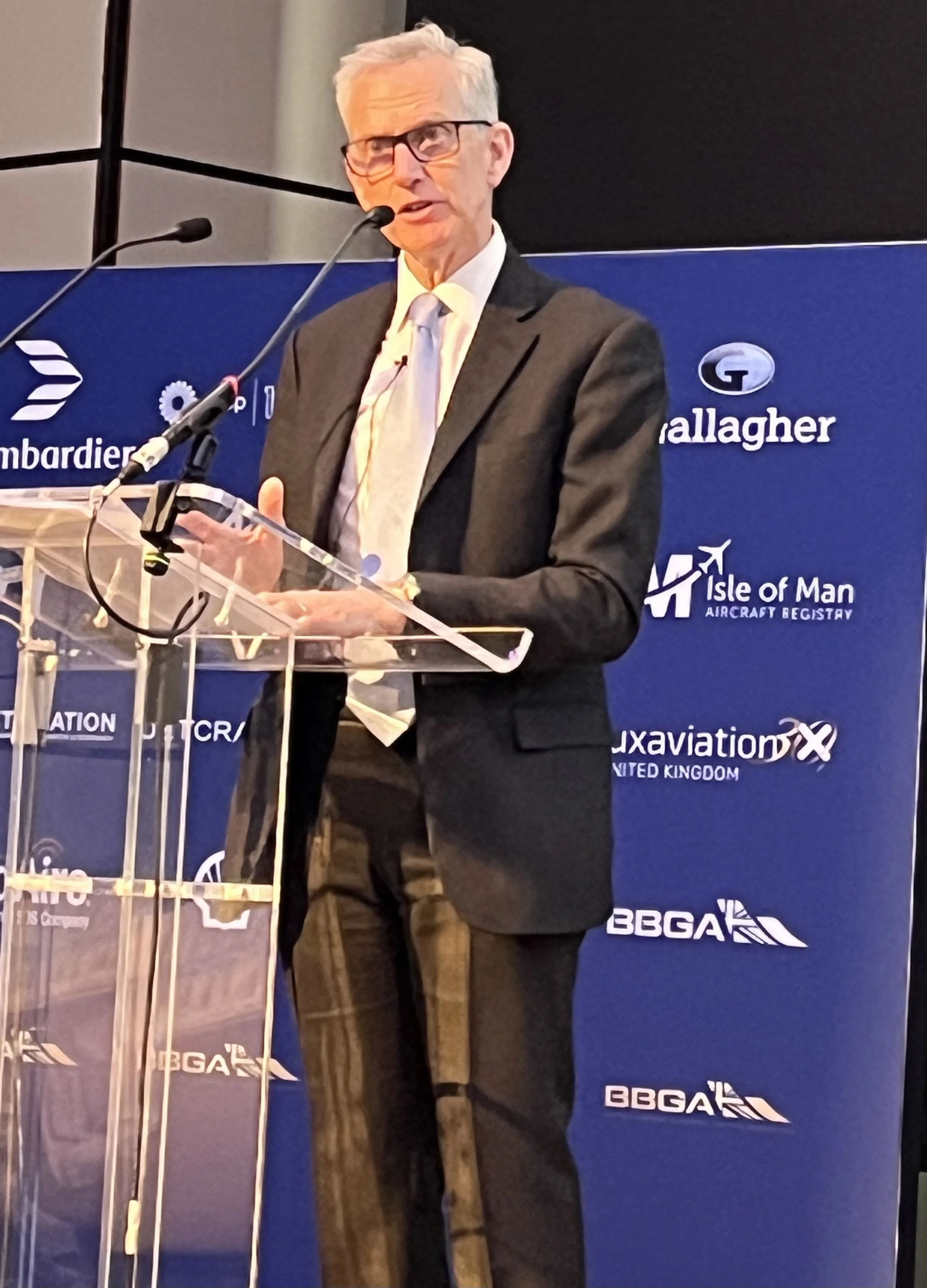
In the keynote address at the BBGA (British Business & General Aviation Association) Annual Conference and AGM on March 12 in London, CAA (UK Civil Aviation Authority) chair Sir Stephen Hillier stressed efforts being made to engage with and listen to the industry more.
“We want to be a world-class regulator and engage with stakeholders,” he said, while adding that he was positive on how the CAA had coped with taking a wider role again since Brexit and leaving EASA.
Challenged on closer cooperation with the EU/EASA, he said that expanding the cooperation agreement (TCA) was a “political issue”, and that the EU had rejected further cooperation for now and doesn’t see the scope for extending the TCA “at the present time.”
Hillier said that, since Brexit, the CAA had expanded “hugely” from around 1,000 staff to over 1,800 and had undergone a “strategic shift – deliberately positioning ourselves as an enabling regulator to encourage the future success of aerospace, with airspace modernisation and integration part of that.”
He noted that “airspace is a huge issue,” but the aim was to enable all users to benefit. The challenge is reflected in the numbers. For example, there are 42,000 pilot licence holders in the UK, but there are now 745,000 RPAS users (drones, etc.).
Hiller concluded by saying that the UK government had set out a challenge for all regulators to cut costs by 25% through being more efficient and putting digitization “at its heart.”
As part of its push to be more accountable to the industry it serves, given that it is a monopoly with a risk of “engaging in monopolistic practices”, it has started to hold an annual address, held at the Royal Aeronautical Society (RAeS) in London. Meanwhile, against the backdrop of the Iran conflict, he said the CAA needed the “resilience and capacity to respond” to such “system shocks.”