FBO Success: A Multi-Part Series
/7 Immutable Elements for Building Equity in Your FBO Enterprise ©
There are several reasons why FBO owners and operators should want to build equity in their operation. Chief among them are:
7 Immutable Elements for Building Equity in Your FBO Enterprise ©
There are several reasons why FBO owners and operators should want to build equity in their operation. Chief among them are:
By John L. Enticknap and Ron R. Jackson, Principals, Aviation Business Strategies Group
In previous blog posts we discussed nine of the 10 critical elements of an FBO airport lease as part of our series on the six intangibles that can build equity in your FBO.
In this final post for this subject, we will discuss the last critical element, Airport Minimum Standards. The Airport Minimum Standards document is basically what creates a level competitive playing field. It further helps protect the intrinsic value of your enterprise by spelling out the minimum requirements for an FBO or SASO (Specialized Airport Service Organization) operating at your airport and sets the standard of compliance for existing or potential competition.
In essence, it states that if a new operator wants to start an FBO at your airport then they must make the same investment in facilities, pay the same rentals and fees, provide similar services, and operate on the same level as your business.
Although an FBO Minimum Standards document is generally separate from your lease and resides as part of the rules and regulations of the airport, it is important to make sure it is called out in your lease. Many airports do not have minimum standards and this may cause a problem for the existing businesses.
Two important elements of an airport minimum standards document are its purpose and the issuance of a permit, lease or operating agreement.
Purpose
The purpose of minimum standards is to establish and make requirements for general aviation aeronautical activities. They are established in the public interest for the safe and efficient operation of the airport in order to enhance orderly growth and comply with federal, state and local government legal requirements. It also provides information to parties operating or desiring to operate at the airport. These standards in general establish minimum levels of service that shall be offered in order to protect the public welfare and prohibit irresponsible, unsafe or inadequate services.
Permit, Lease or Operating Agreement
No person, including an aeronautical service operator, shall offer or perform a commercial aeronautical activity, operation or service at an airport without written authority for such service. Such authority will generally be contained in a Permit, Lease or Operating Agreement that has been negotiated between the FBO/SASO and the airport.
Keeping these elements in mind will assist you in maintaining your FBO business no matter what the competition may bring to the airport environment. Make sure the minimum standards are up to date. Many documents we review for our clients are up to 20 years old.
In our next blog, we’ll start a new series based on the second intangible that can build equity in your FBO: A Favorable Fuel Supplier Agreement.
About the bloggers:
John Enticknap has more than 35 years of aviation fueling and FBO services industry experience. Ron Jackson is co-founder of Aviation Business Strategies Group and president of The Jackson Group, a PR agency specializing in FBO marketing and customer service training. Visit the biography page or absggroup.com for more background.
Subscribe:
By John L. Enticknap and Ron R. Jackson, Principals, Aviation Business Strategies Group
As part of a new blog series, we'll take each of the six intangibles that can build equity in your FBO and give you valuable insight as well as insider tips to help you add intrinsic value to your business.
Starting at the top of our intangible list, developing a long-term lease with your airport authority is the lifeblood of your FBO operation and plays a large part in building equity in your enterprise.
The critical elements of a lease to understand, and that are a part of the negotiating process with the airport authority, include the following:
The tenth critical element, an Airport Minimum Standards document, should be part of your lease. We consider this one of the main six intangibles and will treat this as a separate subject in a future blog because it is a very important component with distinct elements.
In our next blog, we will break down these components with some additional tips to help you negotiate the optimum lease.
About the bloggers:
John Enticknap has more than 35 years of aviation fueling and FBO services industry experience. Ron Jackson is co-founder of Aviation Business Strategies Group and president of The Jackson Group, a PR agency specializing in FBO marketing and customer service training. Visit the biography page or absggroup.com for more background.
Subscribe:
By John L. Enticknap and Ron R. Jackson, Principals, Aviation Business Strategies Group
Running a successful FBO operation requires attention to six intangibles. Reaching favorable terms and taking care of these intangibles the right way will help build equity in your business.

If you’ve ever gone to a bank to get a project financed, you know that it takes a savvy banker who understands the FBO business to get the project done. Most lending institutions can’t get over the first hurdle when they discover that an FBO doesn’t own the land where a proposed hangar is to be built.
To be sure, the FBO business is relatively unique. Often airports require FBOs to make major capital improvements as part of their lease, especially at time of renewal or in granting a request for a lease extension. Yet, at the end of the lease, none of the improvements are tangible assets that an FBO operator can liquidate. They are owned by the airport, which also owns the land.
Besides some ground service equipment, a typical FBO doesn’t have much tangible collateral. The real value bankers or investors are interested in is mostly the intangibles that help increase equity in an FBO enterprise. These include:
In coming blogs, we’ll discuss each of these and make recommendations on how to improve the equity in your FBO.
About the bloggers:
John Enticknap has more than 35 years of aviation fueling and FBO services industry experience. Ron Jackson is co-founder of Aviation Business Strategies Group and president of The Jackson Group, a PR agency specializing in FBO marketing and customer service training. Visit the biography page or absggroup.com for more background.
Subscribe:
FOLLOW US
Flight Pro International (FPI) is pleased to announce additional upgrades to their custom trip management software, Flight Pro Connect (“FPC”, flightproconnect.com), an annually pen-tested, cloud-based, and centralized trip management software built for schedulers, operators, and crew.
At RealClean Aircraft Detailing Bozeman, winter preparation starts well before the first major snowfall. Aircraft flying through Bozeman Yellowstone International Airport face months of freezing temperatures, snow, ice, and repeated exposure to glycol based deicing fluid.
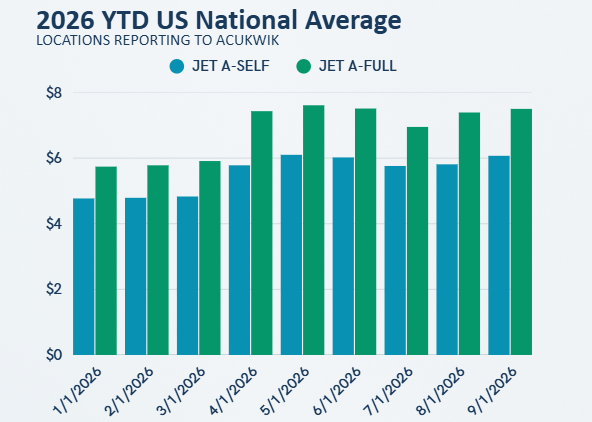
The latest ACUKWIK U.S. Regional Fuel Pricing Report shows a mixed picture entering September, with Jet A prices moving higher while 100LL prices edged lower. At the same time, the number of locations represented in the report increased sharply, providing a broader view of retail aviation fuel pricing across the United States.
Asuncion is getting ready to welcome athletes, teams, delegations and visitors from around the world for the World Skate Games 2026. For operators bringing passengers to Paraguay, having reliable local aviation support can make all the difference.
At Consorcio Aviation, we provide coordinated aviation services in Asunción and across Latin America and the Caribbean, helping operators, teams, delegations and private aviation clients manage the operational details behind their movements.
Damien Neff, line service supervisor for the Naples Airport Authority, has completed the rigorous U.S. Airport Professional (USAP) program through Airports Council International-North America.
FCG OPS has enhanced its international trip support offering as part of the company’s next stage of growth, leveraging 26 years of operational aviation experience to serve operators worldwide. Supporting this development, FCG OPS has appointed Ilaria Iacobini as Business Development Manager, EMEA, bringing extensive industry knowledge and expertise to the team.
COPYRIGHT © 2026. ALL RIGHTS RESERVED. INFORMA MARKETS, A TRADING DIVISION OF INFORMA PLC.
ACCESSIBILITY | PRIVACY POLICY | COOKIE POLICY | TERMS OF USE