2026 Annual FBO Fuel Sales Survey Results
/FBO Fuel Sales Made a Marked Recovery in 2025
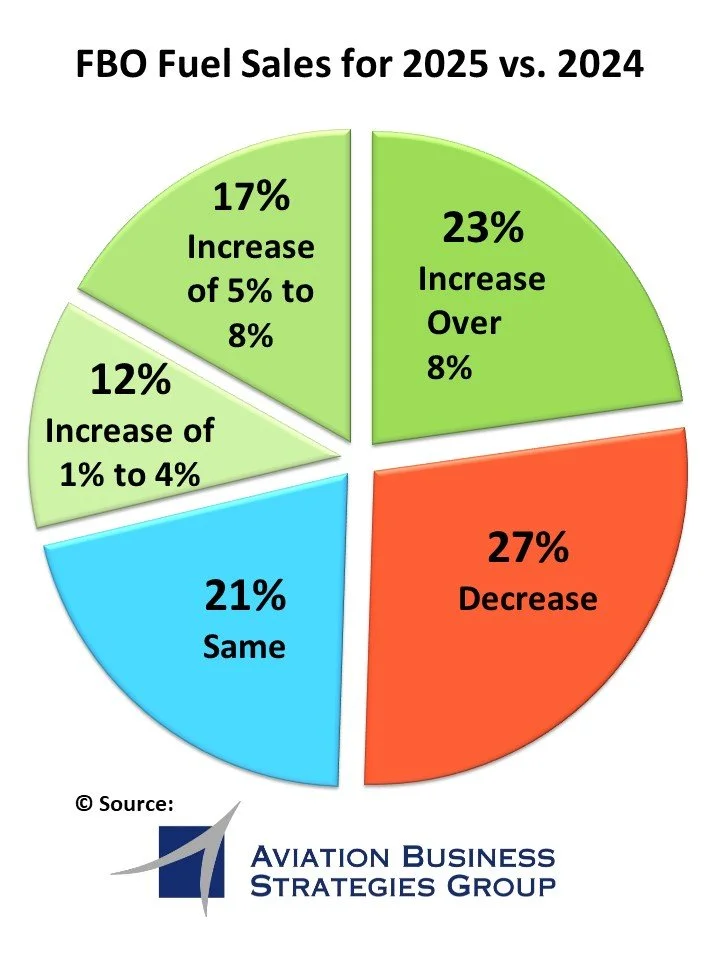
Following a relatively stagnant 2024 market, most FBOs reported an increase in fuel sales for 2025 according to our Annual FBO Fuel Sales Survey.
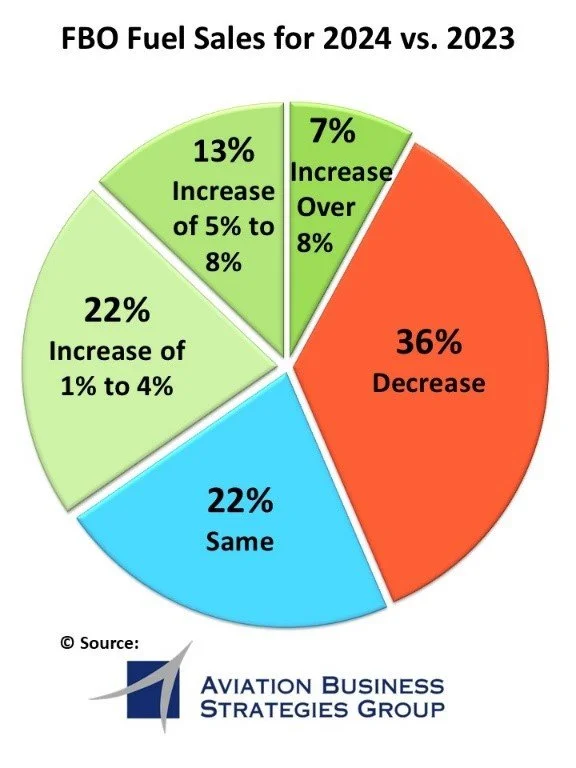
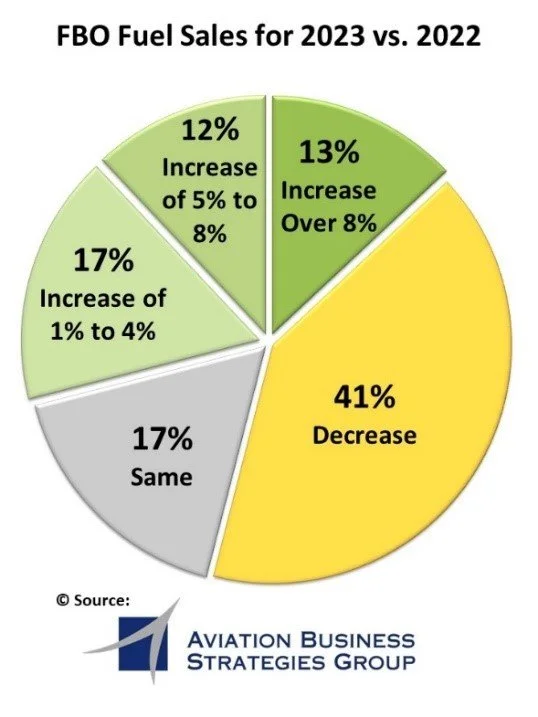
More than 50% of FBOs responding to the survey reported having an increase in fuel sales with a record 23% recording an increase of more than 8%. This is the highest reported percent gain for our top category in the history of the survey dating back more than 11 years.
Also, of note is that the percent of FBOs reporting a decrease in sales has steadily declined over the past three years with 41% reporting a drop in 2023, 36% in 2024 and 27% in 2025.
The following charts show the results of the survey over the past three years:
Contributing Factors
Survey respondents noted that several factors contributed to an uptick in fuel sales in 2025 to include:
Increased flying by both fractional owners and Part 135 charter operators.
Lower fuel costs contributed to more hours being flown by training and recreational customers.
More flight hours being flown by base customers.
These observations by survey respondents are in line with Argus International’s. Their TRAQPak analysis indicated flight activity during 2025 was up 3.4% from 2024 with flight hours reporting a 3.5% gain for the same period. Fractional flight activity led the way with a reported yearly growth of 9.4% which represented a yearly gain of 59,826 flights.
Question on Economy
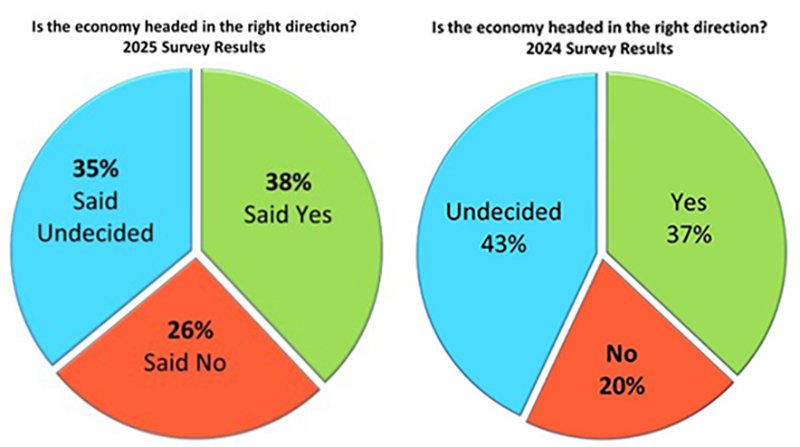
Another question we ask in our survey probes the level of confidence that FBO operators have in the current economy: ‘Is the economy headed in the right direction?’
For 2025, while 38 percent said yes, an increase of 1% over the 2024 results, 26% said no, an increase of 6% year-over-year. Another 35% were undecided.
The following charts show the results of the survey over the past two years:
New Question For this Survey: Does Your Airport Charge a Concession Fee?
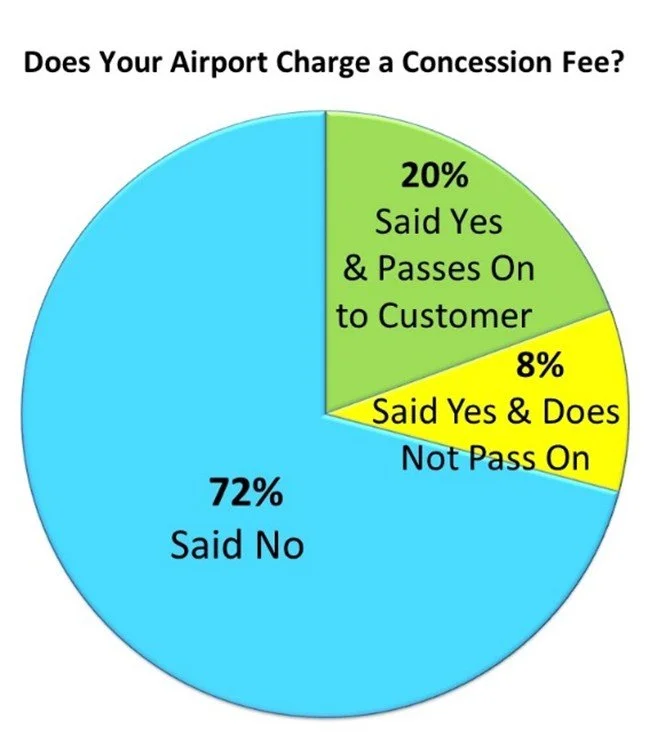
As part of our survey, we asked FBOs: Does their airport charge a concession fee? In talking with many FBO owners and Operators over the past year, we are finding that many are concerned about a growing trend where airports are beginning to charge a concession fee which traditionally is charged by airports to concessionaires within the confines of commercial airport terminals. Examples would be restaurants, bars, gift shops, convenience stores or a premium coffee vendor.
“When we went to renew our airport lease, we were surprised to find a clause in our new lease outlining a concession fee for certain FBO services such as aircraft maintenance and parts,” one concerned FBO owner told us. “This was new to us, having operated on this airport for more than 40 years. We already pay a ground rental fee as well as an into-plane fuel fee, so we thought this was a bit excessive and frankly felt like a money grab on the airport’s part. Ultimately, we were unable to negotiate this fee out of our lease. With margins already being so thin, we had no choice but to pass this fee along to the customer.”
Another FBO operator indicated that such concessions fees will ultimately add to the cost of aircraft ownership which is already rising due to costs associated with increasing rates for FBO labor, insurance, aircraft parts and new hangar construction.
For our survey, we offered multiple-choice answers to the question to include:
Yes, (the airport charges a concession fee) and we pass it on to our customers.
Yes, (the airport charges a concession fee) but we do not pass it on.
No, (the airport does not charge a concession fee)
A total of 28% of respondents said Yes, our airport charges a concession fee. Of these, 20% said they passed it on to customers while 8% do not. A total of 72% of respondents indicated that their airport does not charge a concession fee. (See related graph)
Top Four FBO Industry Concerns
Included in our survey, we asked respondents to provide their main concerns for their FBO and/or the FBO industry. Here are the top four mentioned:
Geopolitical Uncertainty: Since this survey was conducted in March, FBOs had an opportunity to express concerns over the geopolitical uncertainty affecting various business markets as well as the rising costs associated with aviation fuel.
Rising Costs of Operations: FBOs expressed concerned over the higher costs associated with running their business to include rising insurance rates, higher labor costs and increasing costs of aircraft parts. Many are feeling pushback from customers due to the rising FBO costs associated with aircraft ownership and operations, such as higher hangar and aircraft maintenance rates.
Higher Construction Costs: Although there is greater demand from aircraft owners and operators for hangar space (that often necessitates waiting lists), the cost of construction is hampering FBOs who are looking for a reasonable return on investment (ROI).
Labor Shortage: For several years following the Covid Pandemic, FBOs have had difficulty in finding and retaining skilled labor to maintain aircraft and to perform trained technical tasks, including fueling aircraft and maintaining the high safety and quality standards needed to run a successful operation.
In our next blog post, we will provide our Annual FBO Industry Outlook for the rest of 2026 and beyond.
Please leave any comments you have about this blog post below. If you have any questions, please send us an email: John Enticknap, jenticknap@bellsouth.net, Ron Jackson, ronjacksongroup@gmail.com.
© 2026 ABSG/TJG
SUBSCRIBE: Subscribe to the AC-U-KWIK FBO Connection Newsletter